Solid skincare often gets filed under “trendy skincare” but it shouldn’t be. Once you understand what’s in a bottle of liquid lotion or shampoo, eco-friendly solid skincare stops being a lifestyle choice and starts being basic chemistry with a healthy dose of cost saving.
What’s in the bottle
Most liquid lotions, shampoos and conditioners are built on water. It’s usually the biggest single ingredient in the formula, often 60 to 80 percent. Everything else (the oils, the actives, the fragrance) make up what’s left. You’re not just buying a moisturiser or shampoo. You’re buying a bottle mostly full of water, packaged in plastic and shipped to your door.
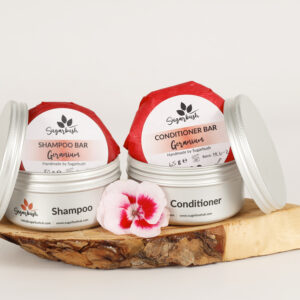
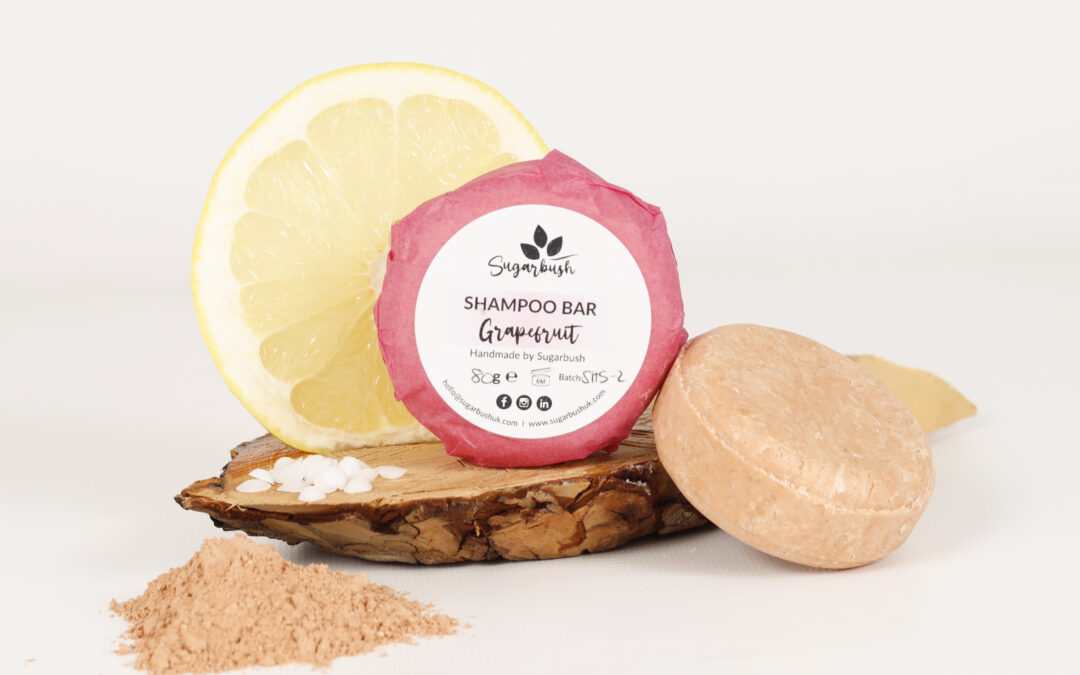
A shampoo bar skips that step. When I formulate one, there’s a very small water phase that evaporates as the bar dries. The biggest component (over 70 percent) of the bar is gentle surfactants to clean your hair and scalp without stripping away your skin’s natural oils. The rest of the ingredients are plant oils, hydrating agents like panthenol, essential oils for fragrance and plant-based phytokeratin to strengthen and repair hair. Conditioner bars have no water at all. Nothing gets added to bulk these bars out. What you’re paying for is what’s doing the work on your hair.
Likewise, a lotion bar replaces a liquid moisturiser and is built from a combination of hard and soft butters, plant oils and essential oils.
Why that changes the packaging
Because there’s no water in a lotion bar, mould and bacteria aren’t the risk they’d be in a liquid formula. What you’re guarding against instead is oxidation. This is where oils and butters slowly turn rancid as they’re exposed to air and light. A small amount of vitamin E counters that, protecting the oils and butters to give the bar a long, stable shelf life without needing a preservative system at all.
That’s why my lotion bars and lip balms go out in aluminium tins. Less product mass, because there’s no water weight to carry. Less packaging, because there’s no need to engineer around contamination risk. Completely recyclable and in some cases, refillable – I’m still working on a refillable lip balm solution. It adds up to a smaller, lighter object sitting on your shelf and a much smaller one travelling to get there.
What about shampoo and conditioner bars, I hear you ask? Sugarbush bars are simply wrapped in tissue paper and a paper label. They may benefit from a travel tin but if it’s being used at home, a self-draining soap dish is all that you need to preserve the longevity of the bars and reduce packaging waste.
This isn’t a fringe choice anymore
Solid formats have gone mainstream. WRAP’s Recycle Now tracker found that 56 per cent of people already use bars of soap as part of their routine and a quarter have tried a dry shampoo or conditioner bar. If you’ve already made that switch for soap, moving lotion, shampoo and conditioner over isn’t a stretch.
If you’re building a lower-waste routine and want somewhere to start, a shampoo bar is an easy first swap. No pump to break, no plastic to recycle and minimal packaging that’s designed to be refilled rather than binned.
What this isn’t
As always, honesty and transparency are at the heart of what I do. Eco-friendly solid skincare isn’t automatically zero impact. The butters and oils in a lotion bar still get grown, harvested and shipped to me here in Devon before I ever touch them. Being solid doesn’t erase a product’s footprint. It removes one specific, measurable chunk of it (the water and the bottle). For most liquid cosmetics, this accounts for the bulk of shipping weight and packaging volume.
Where the butters and oils actually come from
My shea and cocoa butter both come from The Soapery, a UK supplier. Neither ingredient grows anywhere near Devon. The shea is harvested and processed in Ghana. It is wild-harvested by a women’s co-operative, dried in the sun, roasted over an open fire, then milled and kneaded by hand in the traditional way before it’s shipped over. The cocoa butter is pressed from beans grown in Africa or South America, then sent to Europe for processing before it reaches the UK. Both still have a long way to travel before they get anywhere near a mixing bowl in Devon. None of that changes once a product goes solid. A lotion bar still carries the footprint of however far its raw ingredients travelled, on top of whatever it took to grow and process them in the first place.
That’s the honest case for eco-friendly solid skincare. It doesn’t erase the footprint of what’s inside a bar, but it does cut the heaviest, easiest-to-reduce part of it.
You can read more on building a low-waste skincare routine in the blog.