Preservatives in skincare are one of the most misunderstood – and often controversial – aspects of skincare formulation, particularly when it comes to natural skincare.
They’re often seen as something unnecessary, or even something to avoid. In reality, preservatives play a crucial role in keeping skincare products safe. Without them, many products would pose a far greater risk to the skin than the preservatives themselves.
Some products absolutely require preservation. Others don’t. Understanding the difference is an important part of understanding how skincare works.
Why preservatives are used in skincare
The key factor is water.
Any product that contains water – such as creams, lotions, gels, toners, shampoos or conditioners – creates an environment where microorganisms can grow.
These include:
- Bacteria – some can cause irritation or infection
- Yeast – often responsible for product spoilage
- Mould – a visible sign of contamination in some cases
These microorganisms are naturally present in the environment and can easily enter a product during use. Even dipping clean fingers into a jar introduces microbes. Without a preservative system in place, they can multiply quickly.
What happens without a preservative?
One of the biggest misconceptions is that you can always tell when a cosmetic product has gone off. Microbial contamination is often invisible. A product may look and smell completely normal, but still be unsafe to use.
Using contaminated skincare can lead to:
- skin irritation
- breakouts
- infections (in more serious cases)
This is one of the key reasons preservatives in skincare are considered essential for safety. In fact, the risk of using an unpreserved water-based product is significantly higher than using a properly preserved one.
Which products don’t need preservatives?
Products that don’t contain water – known as anhydrous products – generally don’t require preservatives.
These include:
- oil blends
- balms
- body butters
- lotion bars
Without water, it is much harder for microorganisms to grow. However, these products still need to be formulated carefully to remain stable and safe, particularly depending on how they are stored and used.
Are preservatives in skincare safe?
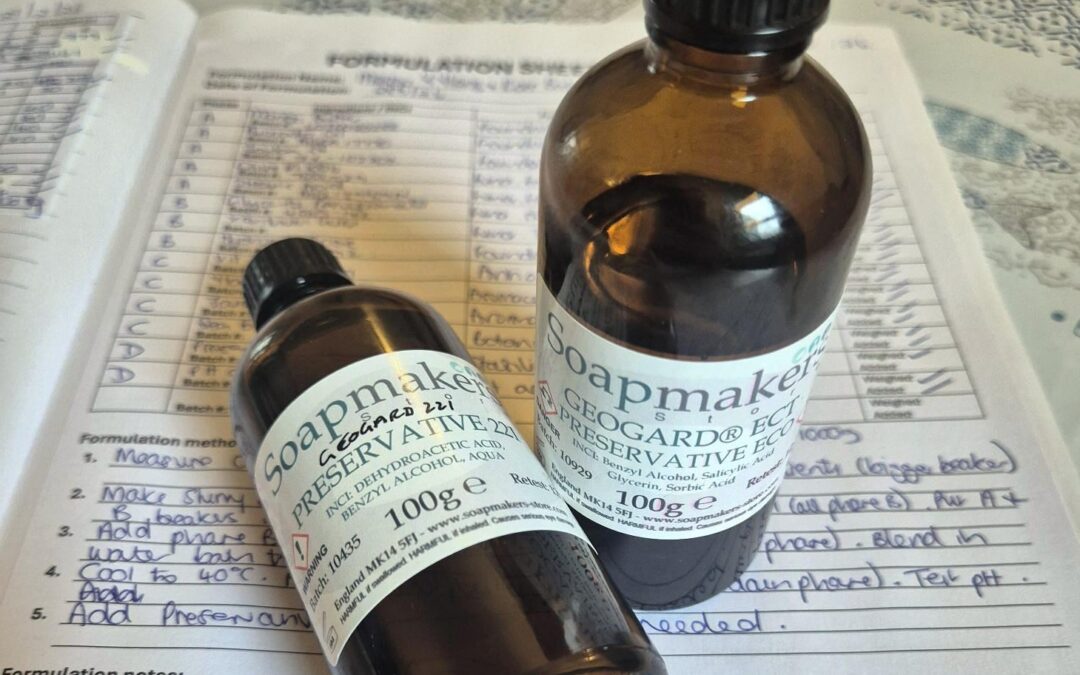
Preservatives in skincare are carefully selected and used within strict regulatory limits. Their safety is assessed as part of the overall formulation during the cosmetic safety assessment process.
The key question is not whether a product contains a preservative, but whether it has been formulated responsibly. A preservative is only effective if it is used correctly and within the right conditions. This applies whether the raw ingredients are considered natural or synthetic.
Natural vs Synthetic Preservatives
When discussing preservatives in skincare, this is where much of the confusion arises. The increasing demand for “natural” products has made many consumers wary of synthetic ingredients.
Synthetic preservatives are typically:
- well studied
- highly effective
- consistent in performance
- used at low levels
Because of this, their safety profiles are well understood.
Natural (or naturally derived) preservatives are often:
- more complex
- more sensitive to formulation conditions
- dependent on pH and compatibility
They require careful formulation and, in some cases, may need to be used as part of a broader preservation system. When used correctly, they can be very effective and are a good option for brands that prefer naturally derived ingredients. The good news is that natural preservatives are being developed all the time so formulators have plenty of options to choose from.
So which is better?
There isn’t a simple answer. What matters most is:
- whether the preservative system is effective
- whether it is used at safe levels
- whether the product has been properly assessed
A well-formulated product using a synthetic preservative is far safer than an unpreserved product — even if that product is made entirely from natural ingredients.
The role of the formulator
Choosing a preservative is not just a tick-box exercise.
It involves considering:
- the type of formulation (water-based or anhydrous)
- the ingredients used and whether any of those already contain preservatives
- the pH of the product and how this matches to the optimum pH range of the preservative
- how the product will be used
- packaging and storage conditions
For example, a product stored in a humid bathroom environment may require additional consideration, even if it contains little or no water.
The goal is always the same:
To ensure the product remains safe and stable throughout its use.
Where this knowledge comes from
Understanding natural skincare safety and preservation isn’t guesswork. It comes from training, research and ongoing learning.
Much of my knowledge in this area comes from my training with Formula Botanica, alongside further study into cosmetic safety, compliance and formulation.
If you’re interested in learning more about formulation and ingredient safety, they’re a very good place to start.
Final Thought
Preservatives in skincare are not there to make products worse, they are there to make them safe. They are one of the key reasons skincare products can be used confidently over time.
In well-formulated products, preservatives are carefully selected, properly balanced, and essential to the integrity of the product.
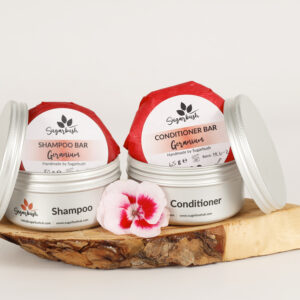
At the moment, most Sugarbush products are anhydrous although it’s not because of preservatives. The real reason is that water-based products require challenge testing to ensure the preservative system is robust. This is a big cost to small enterprises. When starting out, it’s also easier to manufacture anhydrous products while you develop the skills needed for more complex formulations. You can view our full range of Lotion Bars and Lip Balms in the shop.