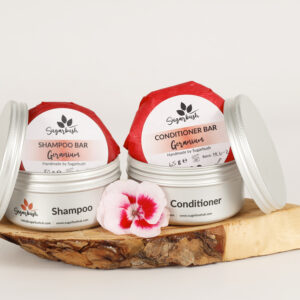
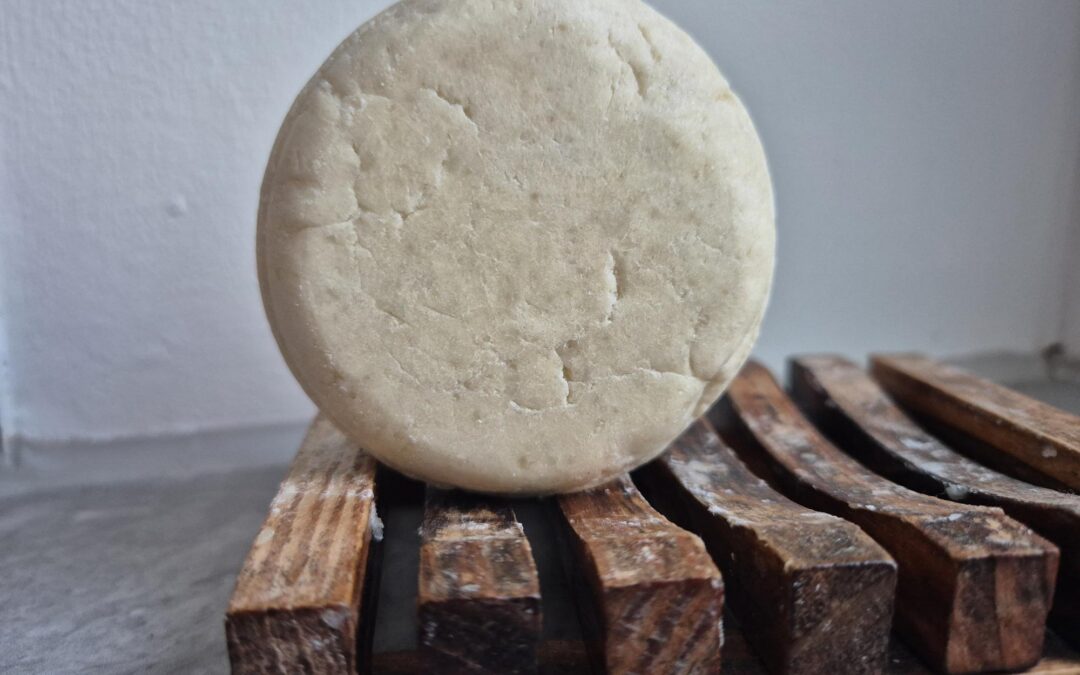
How long does a shampoo bar last? Unlike lotion bars, a lot of people I speak to are familiar with shampoo bars and have tried them before so have a good idea of this already. Then there are the ones that haven’t. These are the customers who ask me this question. They’re mentally doing some calculations in their head on cost and longevity of a bar versus a liquid.
Fair question. £13 for something that fits in your palm looks like a lot if you’re used to grabbing a bottle with the weekly shop. So, how can I justify the bigger upfront cost?
The answer is measured in months
A Sugarbush shampoo bar weighs a minimum of 80g and gives roughly 60 washes.
Sugarbush isn’t the only brand to quote number of washes as a metric to help you figure out the true value of the product. But, 60 washes is a hard number to picture and there are so many variables that determine the true period of use. For me, a bar runs three to four months. My hair’s long, I wash it four or five days a week because I’m at the gym and I’ll sometimes lather twice if it needs it. If you wash less often than that, you’ll get longer. If someone else in the house starts borrowing it, you won’t.
Hair length changes things too. Past your shoulders and you’ll use more per wash than someone with a crop.
Why a small bar goes so far
Here’s the part that answers the cost question properly.
A bottle of liquid shampoo is mostly water. A Sugarbush bar is under 5% water. More than two thirds of it, by weight, is sodium cocoyl isethionate, the coconut-derived surfactant doing the job of cleaning your hair and scalp. The rest is the conditioning system, cocamidopropyl betaine (another mild cleaning agent) to build the lather, panthenol and phytokeratin and small amounts of coconut, cocoa butter, argan, olive and jojoba oil.
So when you buy a bottle you’re paying to ship water, plus the plastic needed to hold the water and then you add more water in the shower anyway. A bar skips that step entirely. You do the diluting yourself, at the point of use, with water that’s already running.
That’s why an 80g goes as far as it does. Formula Botanica estimates around three bottles’ worth per bar, which matches what customers tell me.
The one habit that halves the life of a bar
If a bar disappears faster than you expected, it’s almost always because it’s been left sitting in water.
It’s the single most common reason someone concludes a bar was a con. Left in a puddle on the shower shelf, it’ll do exactly what it’s designed to do and dissolve. You’ll be buying another one before you’ve had a proper chance to decide whether you liked it or not.
The surfactants doing the cleaning are water-soluble and they can’t tell the difference between your hair and a pool of standing water. So, every hour that a bar sits damp, a bit more of it goes down the drain having cleaned nothing at all.
A draining soap dish solves it cheaply. You can also stand the bar on its end somewhere with air around it or keep it in a tin with the lid off between washes. Unglamorous advice, but it’s the difference between a bar lasting three months and one lasting a matter of weeks.
Using less without washing less
If you’ve not used a shampoo bar before, there is a method and habit that is worth building from day 1. After wetting your hair, two or three firm passes of the bar is enough. Then build the lather up with your hands rather than scrubbing the bar against your scalp.
The scrubbing instinct comes from bar soap, where you’re working directly on skin. Your hair doesn’t need that level of force. You’ll get through less product and your hair won’t be any less clean for it.
Don’t bin the last bit
Most bars get thrown away with a good tenth still left, once they’re too small and slippery to hold properly.
A soap saver sock is a great addition to the bathroom for exactly this reason. Drop the last fragments in and you can use them on your body in the shower rather than losing them. It’s a small thing but it’s a real part of how long a bar lasts and nobody factors it in when they’re comparing prices at a market stall.
Is it worth the extra?
At £13 for around 60 washes, a bar works out at roughly 22p a wash.
Against a £3 supermarket own-brand bottle, that isn’t cheaper and I’m not going to pretend otherwise. Where it stacks up is against the mid-range and salon shampoos a lot of people are already buying at £8 to £15 a bottle. Three of those is £24 to £45. One bar is £13.
The switch can also come with an unintentional bonus that has nothing to do with price. Several customers have told me they’ve ended up washing their hair less often since switching, including one in a hard water area who’d been washing daily. If you go from five washes a week down to three, those 60 washes stretch from twelve weeks to twenty. You won’t work that out standing at a stall, but you might notice it a couple of months in once you give them a try.
If you’re new to bars
There’s sometimes a short settling-in period while your hair adjusts to a gentler surfactant system than it’s used to. Some people notice nothing at all. Others find their hair feels different for a wash or two.
I’ve written about it properly in the pros and cons of switching. You can also watch the video on how to use bars.
So, how long does a shampoo bar last?
Three to four months for most people, from a bar that’s mostly the working part rather than water.
Provided you let it drain.