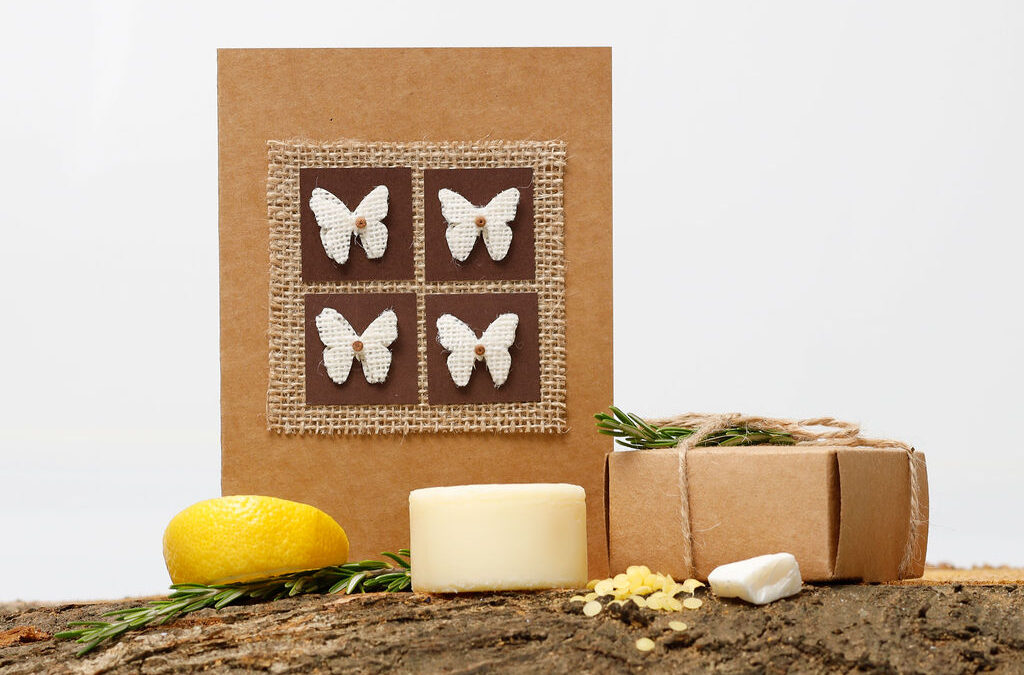
It’s been extremely hot this week. I know because I’ve spent most of it at my desk thinking about melting point data, which is not a typical person thing to think about but is extremely relevant when your bestselling products are made almost entirely of butters and waxes. So let’s talk about how to store lotion bars and lip balms, what happens to them in warm weather and whether storing them in the fridge is a sensible solution.
Why solid products melt in warm weather
Lotion bars and lip balms are anhydrous, no water in the formula at all. They’re held together by a combination of butters, waxes and oils, each with its own melting point. Cocoa butter melts around 34 – 38°C. Shea butter a little lower, around 28 – 35°C. Beeswax holds out until around 62 – 65°C, which is often the thing keeping everything together.
When the temperature in your car, your bag or your bathroom climbs above roughly 28 – 30°C, the softer butters start to lose their structure. The bar doesn’t necessarily collapse completely, but it softens, loses its surface definition and can feel greasy rather than firm. Leave a lip balm on a sunny windowsill and you’ll come back to a puddle. Trust me, I’ve done it…more than once.
Should I store my lotion bars and lip balms in the fridge? Yes, with a caveat
Storing your lotion bar or lip balm in the fridge during a heatwave is a perfectly reasonable thing to do. It won’t damage the formula. Cooler temperatures help the butters stay stable and firm, which is exactly what you want.
The one thing to watch is condensation. If you move the product straight from a cold fridge into a warm room, moisture from the air can settle on the surface as it warms back up. For a lip balm in a tube or pot, that’s mostly cosmetic. For a lotion bar sitting in an open tin, it can leave small water droplets on the surface. These don’t affect how the product performs, but give it a minute to come back to room temperature before using it and pat the surface dry if needed.
I’d also avoid leaving products in the fridge long-term if you can help it. Room temperature storage is fine for most of the year and repeated temperature cycling (cold fridge, warm bathroom, cold fridge again) isn’t ideal for any solid product. Think of the fridge as a heatwave measure, not a permanent home.
What about storing lotion bars and lip balms in the car?
Absolutely not! I know this is obvious but I’m saying it anyway. A parked car in summer can reach 50 – 60°C inside. That’s enough to fully melt a lotion bar and turn your lip balm into lip gloss without the handy applicator. If you’re taking products out with you, keep them in your bag rather than the glovebox and in a cool bag out of direct sunlight if you’re heading somewhere warm. Storing lotion bars and lip balms isn’t tricky but it does need a little thought when the temperature goes from 17°C one week to 35°C the next.
What happens after melting
If a lotion bar or lip balm does melt completely and then re-sets as it cools, the texture can change slightly. Butters, particularly shea , can re-crystallise unevenly, which gives a grainy or slightly rough feel to the surface. This doesn’t mean the product has gone off. It’s a textural change, not a safety issue and the product will still work exactly as it should.
If it bothers you, the easiest fix is to let the product melt fully (gently, in a glass container in a water bath), then pour it into a soap mould and leave it to cool slowly at room temperature. Slow cooling gives the crystals time to form properly and the texture usually evens out. You can learn more about how anhydrous products behave in heat here.
The practical bit
For the next week or so while temperatures stay like this:
- Keep lotion bars in their tin with the lid on, somewhere cool and out of direct light
- Move lip balms out of sunny spots – windowsills, car dashboards, the kitchen worktop near the hob
- Pop them in the fridge if you need to, just let them come back to room temperature before use
- If a product has melted and re-set with a grainy surface, it’s still fine to use
Nothing dramatic required, just a bit of careful handling.
A note from me as the formulator
The reason different products behave differently in heat comes down to the ratios in the formula. A product with a higher wax content will hold its shape at higher temperatures but may feel less skin-soft on contact. One with more liquid oils will feel glide-y and nourishing but won’t survive a hot car. For Sugarbush products, I’ve aimed for a middle ground – firm enough to handle normal UK weather, soft enough to melt on contact with skin. This week has very much tested that balance.