Vitamins in skincare are everywhere – Vitamin C serums, Vitamin E balms, niacinamide treatments, B5 moisturisers. But what are they actually doing? And is their presence on a label a sign of a better product or mostly marketing?
This guide covers the vitamins you’ll most commonly see, what the evidence suggests they do and a few things worth knowing before you buy.
Topical vitamins vs dietary vitamins: not the same thing
Before we look at individual ingredients, it’s worth understanding one important distinction. Vitamins you consume (through food or supplements) support skin health from within, contributing to things like cell renewal, collagen formation and barrier repair.
Vitamins applied topically work differently. They interact with the outer layers of the skin rather than entering the bloodstream. How effective they are depends on their form, their concentration and how well the formula is put together.
Not every vitamin listed on a label is present at a level that does much and one type doesn’t replace the other.
The main vitamins in skincare and what they do
Vitamin C (Ascorbic acid)
One of the most researched skincare ingredients. Vitamin C is an antioxidant that can help protect skin from environmental stressors and it’s often used in formulations aimed at supporting a more even skin tone. It’s an essential vitamin, meaning the body can’t make it – it has to come from diet or be applied directly.
On the label: Ascorbic Acid, Sodium Ascorbyl Phosphate or Ascorbyl Glucoside. Pure ascorbic acid is effective but unstable, it oxidises and degrades with exposure to light and air. Derivatives are more stable but vary in potency.
Vitamin E (Tocopherol)
A fat-soluble antioxidant found naturally in many vegetable oils. In the skin, it concentrates in the outer layers and can help protect cells from free radical damage. It also plays a role in supporting the skin’s barrier.
There’s a formulation angle worth knowing: Vitamin E is also used to protect oils and butters from going rancid. So, in balms and oil-based products (our lotion bars and lip balms), it’s often there for product stability as much as for your skin.
On the label: Tocopherol (natural) or Tocopheryl Acetate (synthetic).
Vitamin A (Retinol)
One of the most studied ingredients in skincare. Retinol is converted by the skin into retinoic acid, which has been consistently linked to improved cell turnover and the appearance of smoother, more even skin over time.
Worth knowing: Retinol can cause sensitivity, especially at higher concentrations or when you first start using it. Gentler options like Retinyl Palmitate or plant-derived Bakuchiol are sometimes used in its place. Best used in the evening and always with SPF during the day. Seek advice if you’re pregnant or have very reactive skin.
Vitamin B3 (Niacinamide)
Versatile, well-researched and generally well tolerated by all. Niacinamide is one of the more straightforward ingredients in skincare. It’s been studied for its role in supporting ceramide production (which helps reduce water loss) and in relation to skin texture, hyperpigmentation and visible redness.
On the label: Niacinamide. Works across a range of concentrations although very high levels (above 10%) can occasionally cause temporary flushing.
Vitamin B5 (Panthenol)
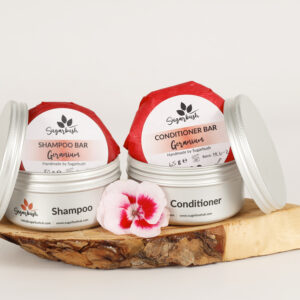
Panthenol is a humectant – it draws moisture to the skin and helps it stay there. It also has soothing properties, which is why it turns up regularly in products for sensitive or reactive skin. In haircare, it’s used for its ability to strengthen and smooth the hair shaft. We use panthenol in our shampoo and conditioner bars.
On the label: Panthenol or D-Panthenol. Stable, gentle and rarely causes any issues.
Do you need vitamins in your skincare?
Some vitamins (C, E, A, B3 and B5 in particular) have a genuine track record and are worth looking for in a well-made product. Others are sometimes present more for marketing reasons than functional benefit.
What matters isn’t whether a vitamin appears on the label, but whether it’s in a stable form, at a useful level and in a formulation designed to let it work. A single hero ingredient on the front of a pack tells you very little about what’s actually going on inside.
Simple, honestly formulated skincare will always do more than a product built around one impressive-sounding ingredient.
A quick note on reading labels
Ingredients are listed in descending order of concentration, highest amount first. Vitamins often sit lower down, which doesn’t mean they’re not doing anything, but it does put them in context. You can read more about reading cosmetic labels here.
A few things to keep in mind:
- INCI names (the official cosmetic ingredient names) can look different from common names. Tocopherol is Vitamin E, Panthenol is B5, Niacinamide is B3.
- Vitamins listed near the very end of a long formula are likely present in trace amounts.
- The same vitamin can appear in multiple forms and not all forms are equally active or effective.
Once you know what you’re looking at, labels become a lot less confusing and a lot more useful for interpreting how effective a product is for your skin.
If you’d like to keep reading, there’s plenty more on ingredients and how skincare actually works over on the Sugarbush blog.