Understanding what causes dry facial skin is more useful than any moisturiser recommendation because the fix depends entirely on which part of the picture is wrong.
Dry skin sounds simple but it’s rarely straightforward. What starts out as tight, occasionally flaky and uncomfortable can quickly start to spiral. Your foundation that won’t sit right and your complexion that looks dull even when you’re not tired. So begins a frustrating (and expensive!) cycle of buying creams and lotions that don’t seem to make any difference.
I came to skincare formulation via marine biology, which sounds like an odd route, but the underlying logic is the same: if you want to understand why something isn’t functioning properly, you have to understand how it’s supposed to work first…and then identify the parts that need attention.
How Skin Holds onto Moisture
Your skin keeps itself hydrated through three overlapping mechanisms. If you can master these with your skincare routine, you’ll be giving your skin the best support.
- The lipid barrier is the outermost layer of the skin (the stratum corneum), made up of dead skin cells held in a matrix of fatty acids, ceramides and cholesterol. Think of it as a brick wall where the cells are the bricks, lipids are the mortar. In simple terms, when this barrier functioning as it should, water stays inside the skin. When it’s compromised, water escapes. That process is called transepidermal water loss (TEWL) and it may be why your skin is feeling dry.
- Sebum is your skin’s own oil, produced by glands in the dermis. It forms a thin film (an occlusive layer) on the surface that reinforces the barrier and slows water loss. Some people produce less of it naturally and production also tends to decrease with age (oh goody). Skin that was never particularly dry can become drier over time.
- The Natural Moisturising Factor (NMF) is a collection of water-attracting compounds inside the skin cells themselves (amino acids, urea, lactic acid). These hold onto water within the upper layers of the skin. When your NMF is depleted, the skin dries from the inside out regardless of what you put on top.
What Causes Dry Facial Skin
There are several factors that cause dry facial skin.
A disrupted barrier
If your skin feels tight and uncomfortable within 20-30 minutes of washing your face, the issue might be a compromised skin barrier. You may be using cleansers that are too effective, water that’s too hot, over-exfoliating or simply using too many products. These can all chip away at the barrier’s structural integrity over time.
Low sebum production
Whether you naturally produce less oil or your sebum production has started changing with age, products can’t change your sebaceous glands. They can’t make them more productive either. But, a good routine can help compensate for low sebum and top up your skin.
The environment
Cold air holds less moisture than warm air. Central heating and air conditioning removes humidity from indoor air. Your skin is constantly negotiating with its environment and in low-humidity conditions, it’s fighting a losing battle without support.
Hot showers
Hot water dissolves the lipids in the skin barrier. It feels good (I’m totally on you with this one!) but it’s genuinely hard on the skin. The more frequently you shower in very hot water, the more you’re disrupting the system. As a person who actively shies away from cold-water showers and is definitely on the lava end of the scale (ask my husband after I’ve used the shower!), I know nobody wants to hear that. Just a small adjustment to the temperature dial can make a difference.
The wrong products
Heavily foaming cleansers, high-pH formulations, alcohol-based toners or anything with a lot of fragrance can all erode the barrier over time. If you’re using a lot of products and your skin is persistently dry, there’s a reasonable chance something in the routine is making it worse. This is more common than people realise. You can become an ingredient detective and by process of elimination, start to identify any common themes.
Diet and essential fatty acids
Drinking more water is often suggested as the fix for dry skin. It’s not…or at least, not directly. Drinking water is important for our overall health and while it can improve skin hydration, it doesn’t travel neatly to the top layer of the skin once you’ve drunk it. To really hydrate from the inside out, you need to pair water consumption with a good diet. Focus on incorporating essential fatty acids into your diet (mainly omega-3 and omega-6) – they are the building blocks of skin barrier lipids. If skin dryness is stubborn and nothing topical seems to shift it, take a little pause and consider whether you are getting enough healthy fats in your diet.
Age
Sebum and NMF production naturally slows with age…I know, another bonus of getting older. I am willing to bet your skin felt fine in your thirties but has become noticeably drier in your forties and fifties without any change to your routine. Your routine is not a problem that needs solving so much as something that needs adapting to accommodate your skin’s changing requirements. Reconsider your skincare routine and what products you use. A few tweaks might be all that you need to improve your skin’s condition.
What Helps Fix the Causes of Dry Facial Skin
Damaged barrier
Plant oils with fatty acid profiles close to those found in the skin’s own lipid barrier (rosehip, hemp seed, sweet almond) help repair and reinforce it. Because dry facial skin often comes down to a compromised barrier, lipid-replenishing oils like these tend to be more effective than heavy creams that simply sit on the surface. If you decide to give these a go, remember to stick with just one at a time for a couple of weeks to see how your skin adjusts. My personal favourite is rosehip because it has so many benefits for skin. You can buy it (as well as most carrier oils) in small quantities from suppliers like The Soapery.
Low sebum
Emollient-rich products, like oils and balms, top up what your sebaceous glands aren’t producing. Apply these to slightly damp skin. A small amount goes much further than you’d expect and helps to create an occlusive layer to slow down TEWL.
Environmental dryness
Humectants pull water into the skin from the environment or from deeper layers. Glycerine, hyaluronic acid and sodium lactate are the ones most commonly found in cosmetics. Look for products containing one of these and use them first after cleansing. Seal with a richer emollient (a simple oil or balm) on top. Without the occlusive layer, the humectant draws moisture up and then lets it evaporate. The order you apply products matters more than you might think.
A Sensible Starting Point
If you’re not sure what’s causing the dryness, start by reducing your products rather than adding something new. Simplify your routine to essentials only – cleanse and moisturise. Start with a gentle cleanser (a creamy one might suit best) and apply a moisturiser while the skin is still slightly damp. For added nourishment, finish with a facial oil. Facial oils are best applied sparingly to slightly damp skin. They don’t add water to the skin themselves, but they can help soften the skin and slow moisture loss when used in the right place in your routine.
Try facial oils
If you want to understand facial oils better, making a very simple one at home is a good place to start. Make your own facial oil with our Simple Facial Oil recipe card. This recipe uses a small number of ingredients so you can see how plant oils work on the skin without overcomplicating your routine. Please note, this recipe is for personal use only. Always patch test before using a new product and avoid using around the eyes. If irritation occurs, discontinue use.
Keep a note of when your skin feels at its driest. Test out the routine for two to three weeks before drawing any conclusions. Adding more products when you don’t know what’s wrong rarely helps and often complicates the picture.
Important note: persistent dryness accompanied by redness, itching or soreness that doesn’t improve is worth a conversation with a pharmacist or GP. Make an appointment to rule out anything more serious. You can also read some of the guidance leaflets on common dry skin conditions at The British Association of Dermatologists.
How Sugarbush Fits In
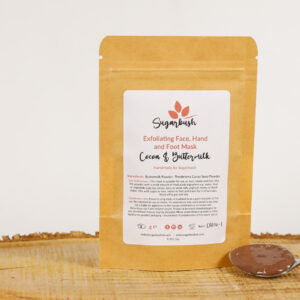
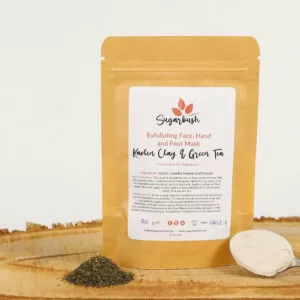
I built the Sugarbush range around the same principle this blog is: understanding what skin actually needs before reaching for a product. The Ghassoul & Colloidal Oat face masks are formulated with dry facial skin in mind. Colloidal oats are soothing and help to create an occlusive layer on the skin while the Ghassoul clay is rich in calcium, magnesium and potassium. BUT, if your skin barrier is compromised, avoid exfoliating until the skin has settled. Even a mild exfoliant like oats won’t be beneficial if used at the wrong time. When you skin has settled, you can start incorporating a fortnightly face mask.
Dry skin isn’t limited to the face. Sugarbush lip balms are perfect for dry lips while the lotion bars are designed for the body rather than the face. They’re richer than most facial skin can comfortably absorb so avoid using these on the face. Have a question about a specific concern? Email me. I’m more than happy to point you toward the right thing to save you buying something that doesn’t quite fit.
Explore More
Shea Butter: A powerhouse for soft, healthy skin