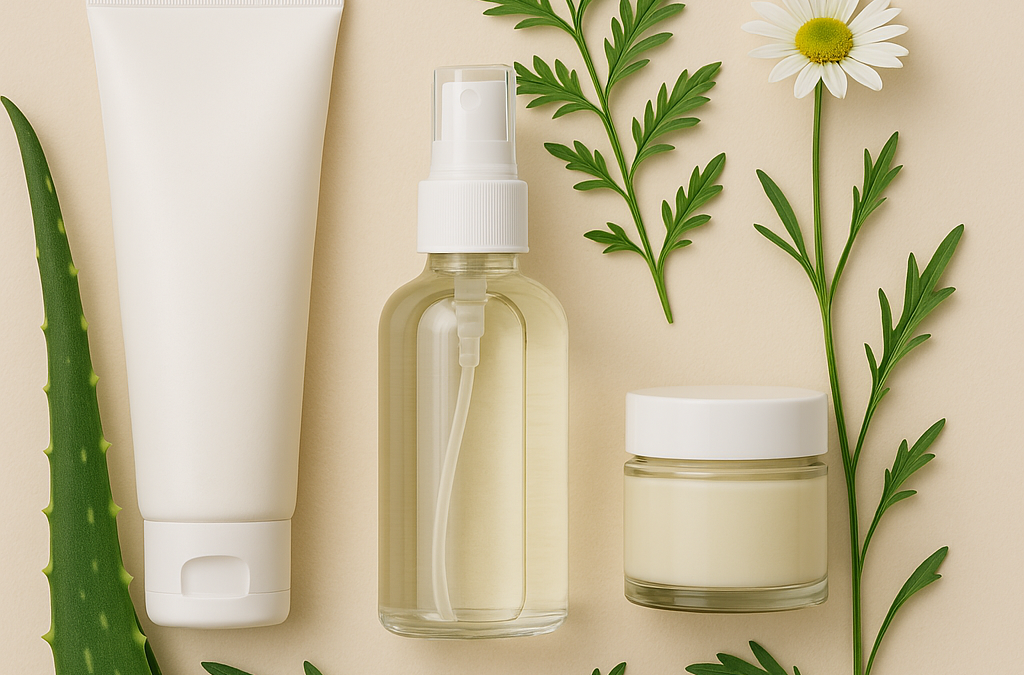
A simple natural skincare routine that actually works
A simple natural skincare routine is enough for most people. I say that as someone who makes skincare for a living, which is an odd position to be arguing from.
The industry is built on the idea that more steps equals better results. Serums layered under moisturisers layered under facial oils layered under SPF, each one targeting a different concern. And if your skin isn’t improving, obviously you’re missing a step. It’s a very elegant sales strategy.
Having spent time formulating products and learning how skin actually functions, I can tell you most skin does better with less interference, done consistently, than with an elaborate routine that gets abandoned by Wednesday.
Start with what your skin needs
Before you think about products, spend a week just watching your skin. Does it feel tight after cleansing? Oily by midday? Consistently dry in some areas and not others?
Most faces can be sorted with three things: something to cleanse, something to hydrate if needed and something to nourish the barrier. That’s all that you need. Everything else is optional depending on your specific skin goals.
Building a simple natural skincare routine: three steps
Step one: Cleanse
The point of cleansing is to remove what’s accumulated on the skin (pollution, excess oil, sunscreen, light make-up) without stripping out what’s meant to stay there. That second part is where most cleansers go wrong.
If your skin feels tight straight after washing, the cleanser is doing more than it should. It shouldn’t feel squeaky or taut, just clean.
Look for a gentle surfactant system. Natural surfactants like coco glucoside, cocamidopropyl betaine or sodium cocoyl isethionate are derived from plant sources and tend to be milder than other sulphates. You can read more about surfactants in the blog.
In the evening, if you’ve been wearing SPF or make-up, a double cleanse makes sense. Oil cleansers are a great first step to dissolve everything, followed by a gentle second cleanse. Depending on your preference, there are foaming or more cream-like cleansers on the market. Personally, I like some bubbles! In the morning, most people don’t need to cleanse at all. Your skin produces very little overnight that needs washing off. A rinse with cool water is often enough.
Step two: Hydrate
Hydration and moisture aren’t the same thing. Hydration is about water content in the skin. Moisture, in the way most people use the word, is about oils and emollients sitting on top of your skin barrier to slow that water leaving.
A simple hydrosol (like rose, chamomile or neroli) or a light glycerine-based mist works is a nice addition here. This step is your more traditional “tone”. Toners or simple floral water hydrate the skin but you don’t need anything complicated. If your skin already feels comfortable after cleansing, you can skip this step entirely.
If your skin is dry or dehydrated (here’s how to tell the difference), a more intensive hydrating step before nourishing makes a real difference. Humectant ingredients (glycerine, hyaluronic acid, aloe vera) attract water into the upper skin layers. Look for serums or light creams that have these in them. Apply to slightly damp skin, then follow with step 3 – an emollient to seal water in.
Step three: Nourish
This is where emollient products (oils, balms, lotion bars) support the skin barrier and slow water loss by sealing residual water in, stopping it from evaporating. A very small amount is usually enough.
Dry skin: Something richer in oleic acid like sweet almond or apricot kernel. Shea butter works well for body. For the face, a few drops of oil pressed into damp skin is functional and unexpensive.
Oily skin: A light linoleic-rich oil like rosehip or hemp seed, applied in the evening. It may seem odd but even oily skin still needs emollients. The temptation is to limit products but depriving your skin usually makes oil production worse.
Combination or normal skin: Jojoba is a sensible default. It’s technically a liquid wax and its composition is close enough to skin’s own sebum that most skin types tolerate it well.
Morning vs evening
Contrary to popular belief, morning routines can be minimal. A rinse or gentle cleanse if needed, a light moisturiser, SPF. Done in a few short minutes with very little fuss or fanfare.
Evening is when skin does most of its repair work and it’s a better time for anything richer or more nourishing. And it’s also, honestly, when most of us have a bit more time and patience for a slightly longer routine that doubles as a bit of self-care.
Keep both short enough that you actually do them every day. Three steps you do every day will outperform ten you do twice a week.
A word on sun protection
Sun protection is the one part of a routine where the science is clear. UV exposure is the single biggest contributor to skin ageing and damage over time.
That said, I’ll be completely honest and admit I don’t wear SPF every day. In a British winter, doing the school run and mostly working indoors, I tend not to bother. When I know I’m going to be outdoors for any significant length of time (beach days, walking, gardening, bike rides — hello summer), I apply it generously and often. Aside from protecting my skin, I really hate being sunburnt.
If you’re looking for more natural options, mineral sunscreens using zinc oxide or titanium dioxide are widely available and tend to suit sensitive skin. Whichever you choose, the best SPF is the one you’ll actually reach for when it counts.
Switching to natural products
If you switch to natural products, your skin may need a short adjustment period. This is particularly the case if it’s been used to silicone-heavy skincare that creates a smooth surface without supporting the barrier. It can feel like a reaction when it might just be recalibration. If a natural product does cause irritation, here’s why.
Go slowly enough that you can tell the difference. Change one thing at a time. If you swap your cleanser, give it a fortnight before you also swap your moisturiser. That way, you can identify what’s working.
For more on what makes a simple natural skincare routine work long-term, the British Association of Dermatologists has good guidance on gentle skincare habits worth reading alongside this.
A quick AM/PM checklist
AM: rinse or gentle cleanse → light oil or moisturiser → SPF
PM: double cleanse if wearing make-up or SPF, otherwise single gentle cleanse → hydrating layer if needed → nourishing oil or lotion bar
Where Sugarbush fits in
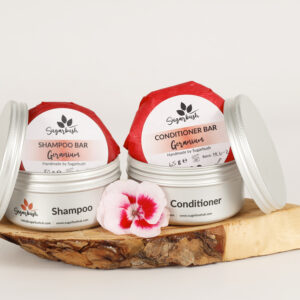
The Sugarbush range is built for the nourish step. I formulate lotion bars for the body, designed to be applied to slightly damp skin so they seal something in rather than just sitting on the surface. Hands, elbows, knees and feet are the areas that tend to need the most TLC.
For facial skin, a small amount of plant oil applied to damp skin will usually do everything a £40 face cream promises. Rosehip is a good starting point for most.
Skincare isn’t only about what you put on your skin, either. Drink plenty of water, eat a balanced diet and your skin will thank you.
The most important thing
A simple routine you actually do every day is better than a perfect one you don’t. Start simple, add things slowly and monitor the changes. If it’s starting to feel like a chore, you’ve probably added too much.
If you’re not sure where to start or which products would suit your skin, feel free to get in touch. I’d rather help you build something that works than have you guessing.