You know that sensation? That slightly uncomfortable, too tight feeling after you’ve washed your face. Most people assume it means their skin is clean, but it might mean your skin is sending you a signal that something needs attention. Here’s what’s happening beneath the surface.
What’s Actually Happening When Your Skin Feels Tight After Washing
Your skin is the largest organ in your body and it has a protective barrier made up of natural oils, proteins and lips. I’ve talked about the brick and mortar structure of skin in previous blogs but lipids are key to holding your skin cells together. The act of cleansing removes dirt and impurities from the skin. The problem is that most cleansers go can too far, stripping away some of those essential lipids along with the grime.
Once that protective uppermost layer is compromised, water evaporates from your skin at a much faster rate. In the skincare world, we call this Trans Epidermal Water Loss, or TEWL. As water evaporates from the outer layer of your skin, your cells physically shrink back. That shrinkage is what creates the sensation of tightness. While your skin might feel squeaky clean, it’s also your skin telling you it’s lost hydration and barrier integrity.
Researchers at Stanford studied this phenomenon, mapping how these physical changes trigger mechanoreceptors (sensory nerve endings beneath the epidermis) which send signals to your brain that we interpret as tightness. Their work showed these sensations directly correlate with changes in skin hydration and barrier function.
Because of this, persistent tightness after washing is a sign that your barrier isn’t holding up as well as it should. Aside from feeling uncomfortable, it also leaves your skin more vulnerable to irritants, environmental stresses, and sensitivity.
Why This Matters
I believe skincare should work with your skin’s natural systems, not against them. It’s the same principle I apply to formulating products – respecting how nature designed things to work rather than forcing results through harsh agents or stripping approaches.
That’s why it’s worth looking out for cleansers that are pH-balanced and that use surfactants carefully. Not all surfactants are equal and the gentler ones are kinder for a reason. If you want to understand more about how surfactants work, there’s a whole post on that here.
What to Look For in a Cleanser
A well-formulated cleanser should leave your skin feeling clean but not uncomfortable. If it feels tight straight after washing, it’s doing more than it needs to. A few things worth checking:
- pH balance. Your skin’s natural surface sits at around pH 4.5 to 5.5. Many traditional soaps sit much higher and disrupt the acid mantle as a result. Look for a cleanser formulated to match skin’s natural pH.
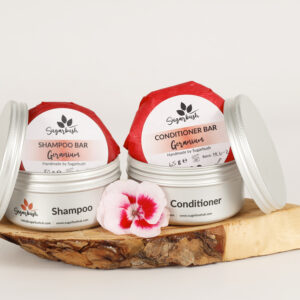
- Surfactant type. Sulphates like SLS and SLES are efficient but can be harsh on the barrier. Milder alternatives such as coco glucoside or decyl glucoside do the same job with considerably less disruption. Our shampoo bars use sodium cocoyl isethionate and cocamidopropyl betaine.
- Contact time. Even a gentle cleanser can contribute to TEWL if left on too long. Rinse-off cleansers with a short contact time are generally kinder than leave-on treatments or exfoliants.
The Other Half of the Equation: Following Up After Cleansing
Once you’ve cleansed, the second half is proper hydration. A good moisturiser isn’t indulgent. It’s how you support your barrier after cleansing and slow the rate of water loss. The ingredients doing that work fall into three broad categories:
- Humectants (like glycerin, aloe vera, hyaluronic acid) draw water into the upper skin layers. They work best applied to slightly damp skin.
- Emollients (oils and butters) soften and smooth, filling the gaps in the barrier.
- Occlusives (beeswax, shea, certain plant butters) sit on the surface and reduce the rate of water escaping.
If you want to understand whether your skin is dry or dehydrated, and therefore which of these it actually needs, it’s worth reading this post.
So What Does This Mean in Practice?
The tight feeling after washing isn’t normal. Once you start using products that don’t strip your barrier and follow up with proper hydration, you’ll notice the difference. Your skin will feel comfortable, supple and genuinely clean without that compromised sensation.
If you’re not sure where to start, get in touch and I’ll point you in the right direction.
Explore More
- Natural Surfactants: What’s Really in Your Cleansers
- Dry Skin vs Dehydrated Skin: How to Tell the Difference
- Why Some Natural Products Irritate Skin
- Simple Natural Skincare Routine: 3 Steps That Work
Reference
Dauskardt RH et al., Stanford University. ‘Mechanics of skin tightness: mechanoreceptor model’.