Transparency in skincare is a phrase that gets used a lot, often by brands with very little to show for it. I’ve been thinking about what it means in practice since Trading Standards visited me last month. It was a routine visit (I was picked at random) and they spent an hour or so asking about what I make, going through my paperwork and checking one of my labels, line by line, against a tick sheet.
It made me realise how much of what makes a product trustworthy is invisible to the person buying it. So this post covers both halves: what the law makes every skincare brand tell you, and the gaps where being open becomes a choice.
What every skincare label has to tell you
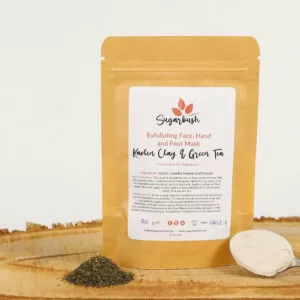
Every cosmetic product sold in the UK, from a supermarket moisturiser to a bar made on my bench in Devon, has to carry the same basic information. According to Business Companion, the Trading Standards guidance site, that includes:
- the ingredients, in descending order of weight
- the name and address of the responsible person (whoever is legally accountable for the product)
- how much is in the pack
- a batch number, so the product can be traced back to when it was made
- a best-before date, or an open jar symbol showing how many months it lasts once opened
- any warnings you need to use it safely
I’ve gone through each of these in more detail in my guide to cosmetic labels. The point here is that they’re the minimum and the same minimum applies to everyone.
What happens before a product reaches you
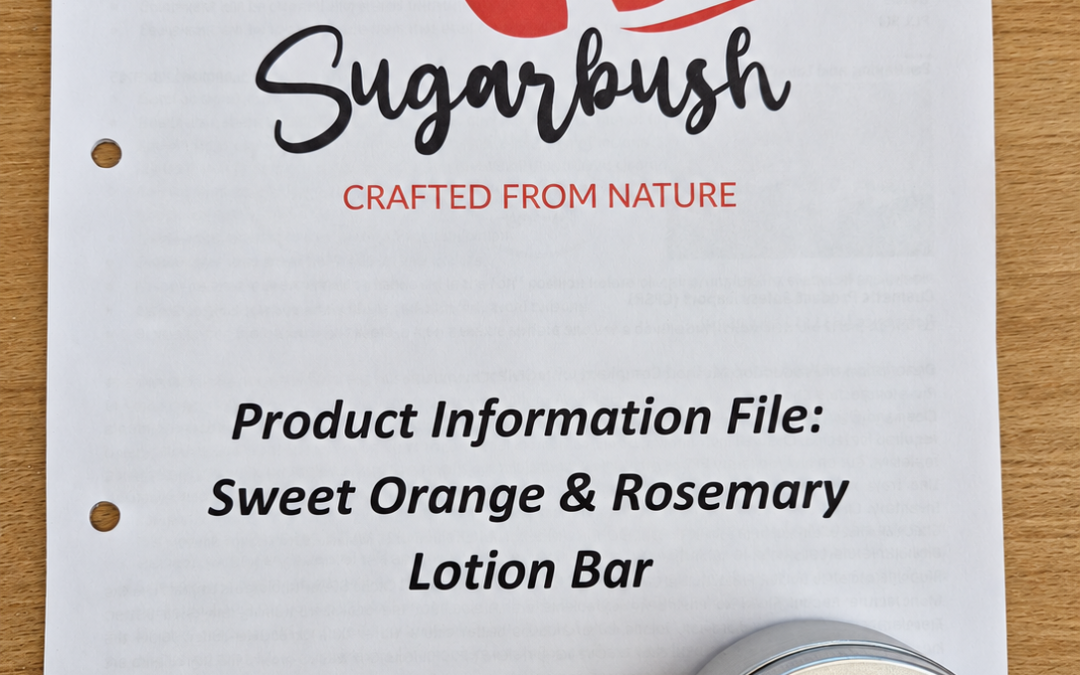
Behind the label, the law asks for a lot more that you’ll never see. Before I can sell anything, each product needs a safety assessment written by a qualified safety assessor, who looks at the formula, every ingredient, and how the product will be used. It also has to be registered with the Office for Product Safety and Standards through the government’s product notification service before it goes on sale. All of it lives in a product information file, along with my batch records and the data sheets for every ingredient.
That’s what Trading Standards asked to see. I’ve written about the day-to-day side in The Work You Don’t See.
Most of this paperwork will never be made public and it doesn’t need to be. But knowing it exists is useful. If you’re buying handmade skincare from anyone, it’s fair to ask whether the product has been safety assessed. A good maker won’t mind the question.
Where the law leaves gaps
This is the part I find most interesting. A label can follow every rule and still tell you less than you might think.
“Parfum” can cover a lot
A fragrance can be listed as one word, parfum, even if it’s made of dozens of ingredients. Only certain fragrance allergens have to be named on their own, and only above set levels: 0.001% in products you leave on your skin and 0.01% in products you rinse off.
In Great Britain, the list of allergens that must be named is still the original 26. In the EU and Northern Ireland, it has just grown to around 80, for new products from 31 July 2026, as Registrar Corp explains. Great Britain hasn’t adopted the longer list…yet. So the same product can tell a shopper in Belfast more than a shopper in Plymouth.
Essential oils are concentrated oil-soluble liquids that are made up of volatile, aromatic molecules. That’s why you’ll find words like linalool and limonene at the end of my ingredient lists. They’re naturally occurring compounds inside the essential oils, which are part of the 26 allergens that must be declared if over the threshold.
You don’t get percentages
The order of an ingredient list tells you what there’s most of, but not how much. An ingredient near the end could be doing important work at a low level, or it could be there in a tiny amount mainly so it can appear on the front of the box.
“Natural” has no legal definition
There’s no legal definition of “natural” for cosmetics. The closest thing is an international standard, ISO 16128, which sets out ways to work out how natural an ingredient is. But it’s voluntary and it doesn’t cover what brands say on their packaging. So “natural” on a label can mean almost anything. I’ve written more about what “natural” means in skincare if you want to go further.
Claims have rules, but they leave room
Claims do have to be truthful and backed by evidence, and “free from” claims are restricted, so a brand can’t use them to suggest a legal, safe ingredient is harmful. But there’s still room for words that sound reassuring and don’t have a set meaning, like “clean”.
What transparency looks like when it’s a choice
The law sets the basic standard. Anything above it is up to the brand. For me, that means:
- Full ingredient lists on the website for every product, so you can read them properly before you buy, instead of squinting at a tin on a market stall.
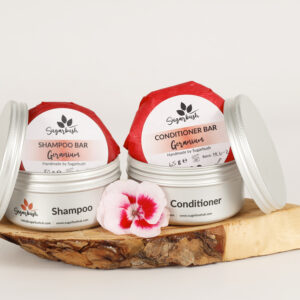
- Explaining the ingredients that look alarming. My conditioner bars contain an ingredient called BTMS, which has “sulfate” in its full name. I’d rather explain what it does and why it’s there, as I have in my post on conditioner bars, than hope nobody notices.
- Saying where ingredients come from, when I know. The shea butter in my bars is wild-harvested by a women’s co-operative in Ghana and comes to me through The Soapery.
- Being clear about limits. My lotion bars aren’t designed for faces, and I say so, even though it would be easier to sell them as an all-over product.
Why transparency in skincare matters
Transparency in skincare matters because it’s the only way you can make an informed choice. If you have sensitive skin or a known allergy, or you simply want to know what you’re putting on your body, the label and the people behind it are all you have to go on.
It’s also a trust purchase in a way that most shopping isn’t. You can’t see a safety assessment or a batch record, so you’re relying on the brand to have done the work. The brands that explain themselves make that trust much easier to give.
I started Sugarbush because I wanted to have control over what I put on my skin and my children’s skin. I want consumers of my products to have that knowledge and freedom of choice too.
Questions worth asking any skincare brand
Whoever you’re buying from, these are fair questions.
- Has this product been safety assessed?
- Can I see the full ingredient list before I buy?
- What does this ingredient do and why is it here?
- Where do your main ingredients come from?
- If I have a reaction, who do I contact? (That’s the responsible person named on the label.)
Every Sugarbush product lists its full ingredients on the relevant product in the shop. If you have a question about anything on my labels, email me at [email protected]. I’d much rather you asked.